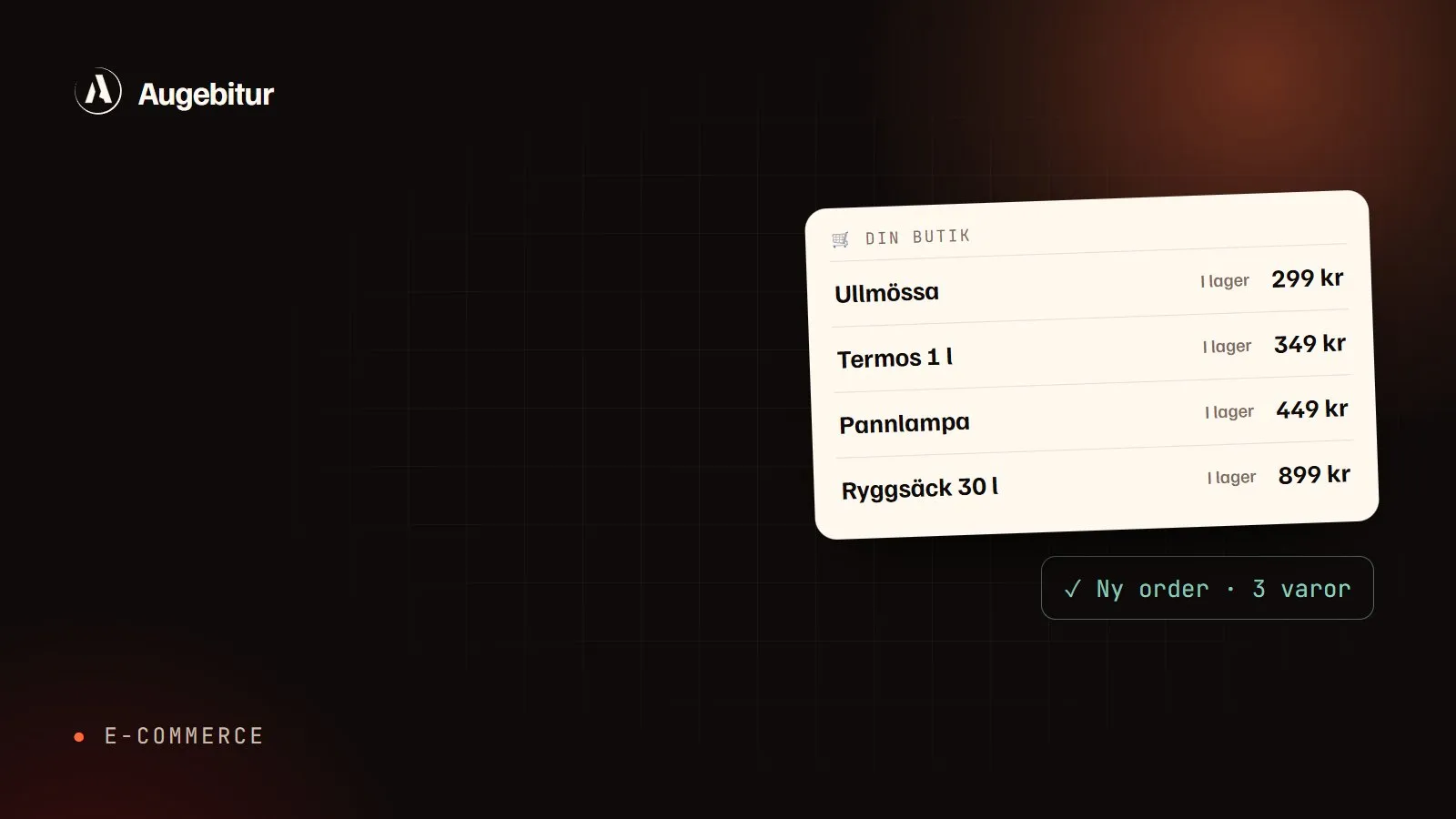
Short answer: An online store needs five things: clear product pages, secure payments through a payment provider, shipping options, terms that follow the law and a site that loads fast on mobile. When you sell to consumers in the EU, prices are shown with VAT and customers have a 14 day right of withdrawal.
What an online store needs
| Part | What it includes | Common mistake |
|---|---|---|
| Product pages | Photos, price, variants, stock status, description | The manufacturer’s text copied, same as everyone else |
| Checkout | Cart, customer details, payment, confirmation | Too many steps and forced login |
| Payments | Cards, local methods, invoice or pay later | Only one payment method |
| Shipping | Pickup points, home delivery, price, delivery time | Shipping cost only shows at the last step |
| Terms | Terms of sale, right of withdrawal, privacy policy | Missing or copied from someone else |
Payments
Never build your own card payments. Use an established payment provider that handles card details, security and rules for you. You get paid out and pay a fee per sale. Pick a provider that supports the methods your customers expect. In Sweden that usually means cards, Swish and invoice or pay later.
The rules in the EU
When you sell to private customers, consumer law applies. These are the basics:
- Prices are shown with VAT
- Customers have a 14 day right of withdrawal on most goods, and you must tell them before they buy
- Terms of sale covering price, delivery, payment, withdrawal and complaints
- Company name, registration number and contact details visible on the site
- A privacy policy on how customer data is handled
- Consent before cookies for tracking and ads are used
Selling only to businesses follows different rules. If you are unsure, check your national consumer agency’s guidance on distance selling.
Speed sells
Most people shop on their phone. Every second a product page takes to load is a second for the customer to change their mind. Heavy themes and lots of plugins are the most common cause of slow stores. A store built in code loads only what it needs.
How we do it: We build online stores on the same foundation as our websites. Pages load instantly, every product gets structured data and payments run through an established payment provider. We always start with a call about how many products you have and how you want to get paid.
Show up in Google
Give every product its own page with its own text, not the manufacturer’s description. Add Product structured data with price, currency and availability. Then Google can show price and stock right in the search results. More on that in the guide on schema markup for businesses.
Platform or code?
A ready made platform is quick to start with and works well if you have many products and want to run everything yourself. A store in code suits you if you want full control over design and speed, no monthly fees for plugins and someone else to handle the tech. Read more about the difference in code based website: why and for whom.