Short answer: A hook is the first line or first second of a post, and it decides whether anyone stops. The ones that work are concrete: a surprising number, a contradiction of what people believe, a clear promise or a mistake the reader recognizes. Never promise more than the post delivers.
Real hooks from Dr. Painkill
These headlines sit on the first slide of posts published on Dr. Painkill, the account we took from zero to over 600,000 followers in about three months:
| Hook | Type |
|---|---|
| One night with the light on raised sleepers’ heart rate all night long | Number and study |
| A single bottle of water holds roughly 240,000 plastic particles | Surprising number |
| The way most Americans drink tea quietly kills its best benefit | Common mistake |
| Sitting all day stiffens your arteries in hours. Two fixes reverse it. | Problem and promise |
| The average American eats half the fiber their body actually needs | Comparison |
| The old Japanese table rule that beats every diet you have tried | Secret |
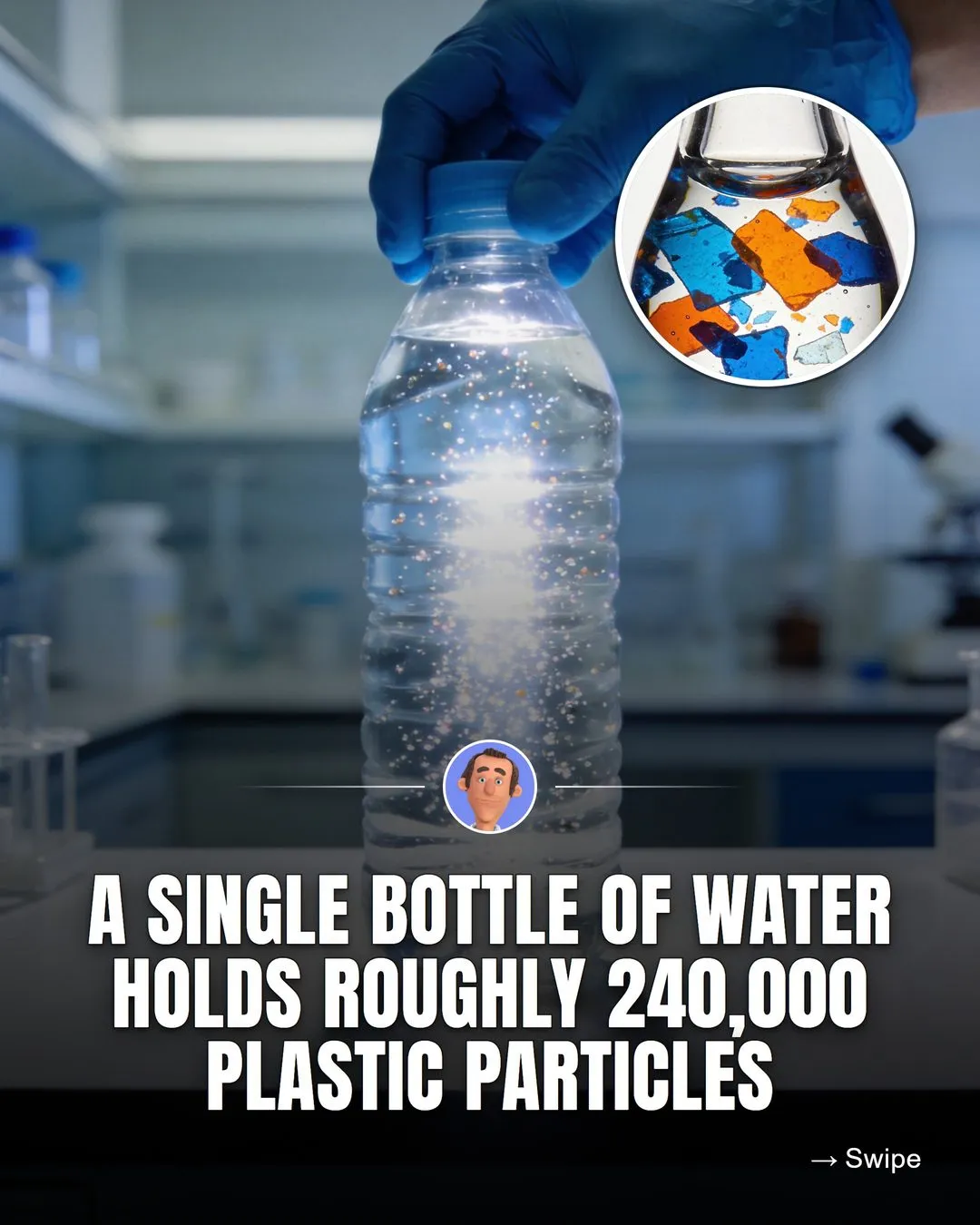 A hook with a number that is hard to scroll past.
Seven types that work
- The number. A concrete figure that surprises. Numbers feel like facts and spark curiosity.
- The mistake. Something the reader probably does wrong. Nobody wants to get it wrong.
- The contradiction. Push back on something people believe is true.
- The promise. A clear result and how short the road there is.
- The comparison. Two things side by side where the answer is not obvious.
- The secret. Something insiders know but customers do not.
- The recognition. A situation the reader recognizes right away.
30 templates for small businesses
Swap out the words in brackets. These are examples to start from, not ready made truths. Every claim has to be true for your business.
The number
- [Number] of the [customers/cars/homes] we look at have the same problem
- This costs you [amount] a year without you noticing
- [Number] minutes a day is enough to [result]
- We have done [number] [jobs]. This is what we learned
The mistake
- Stop [common habit]. Do this instead
- The most common mistake we see when people [activity]
- You are [doing something] wrong, and it is not your fault
- Why your [thing] does not last as long as it should
The contradiction
- [Common truth] is a myth
- A pricier [product] is not always better. Here is why
- You do not need [expensive fix] to [result]
- Everyone says [advice]. We do the opposite
The promise
- How to get [result] in [short time]
- Three things that make [thing] twice as [good/fast/cheap]
- Do this once and skip [problem] for a year
- The simplest way to [goal] without [hassle]
The comparison
- [Option A] or [option B]? The answer may surprise you
- Same [thing], two prices. Here is the difference
- Before and after: [thing] in [time]
- What [amount] gets you with us compared to [alternative]
The secret
- No [trade] will tell you this
- What we look at first when we [task]
- The question to always ask before you buy [service]
- Why pros [do something] before they [do something else]
The recognition
- When [everyday problem] happens again
- If you have [situation], you need to see this
- You know that feeling when [situation]?
- For you who [description of the customer]
- Almost everyone asks us about this
- Save this for the next time you [situation]
Tip: Write the hook last, once the research and points are done. Then you know what the post can actually deliver, and the promise on the first slide becomes both stronger and true.
Test and keep what works
Write three hooks for the same topic and use them at different times. Compare saves and how many swipe on. After a few weeks you see which types work for your audience.
Keep reading with how to make a carousel people save and how often should a business post.